| |
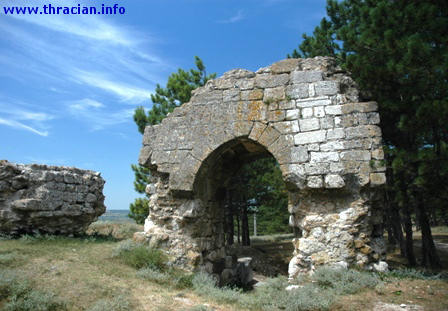
Remains of the
Ancient Fortress on the acropolis of Bizye
There are many books and accounts written about
Turkey's Asian portion called Anatolia, but Thrace (Trakya) still
remains to be explained to the readers. Many of my customers and
friends ask me typical questions such as, "What is Thrace?", "Where is
it?", "What is there?", "Anything interesting there?" or "I have never
heard of it". These are only a few of many questions awaiting to be
answered. When we look at the geographical position of Thrace on the
earth map, we will be able to see its position as one that should never
be underemphasized. Major roads of the ancient past went through Thrace
from east to west or vice versa. The famous road of "Via
Egnatia" was built through Thrace by the Romans
when they formed the Asia province, and it was the main route from Rome
to the East.
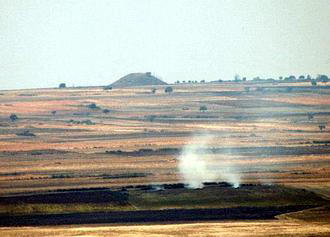
The Burial Mound of the
Thracian King
Although many ancient sites and mounds in Thrace
have been excavated by the archaeologists, the results have gained
little popularity as many people tend to give their attentions to the
classical sites of Anatolia. Only some scholars and people with diverse
interest in antiquity have shown their sympathy in this part of Turkey.
When you are on the top of the hill of Vize
(ancient Bizye or Bisya) which was the capital of
ancient Thracian Kingdom, there is a panoramic view of the surrounding
area, look over the large plain below, you will see in the horizon many
burial mounds each one or two miles apart that belong to the ancient
Thracian kings. A burial style that was carried later to Anatolia and
farther on to other parts of the Near East. Even the tomb of King Midas
in central Anatolia astonishingly resembles one of these burial mounds
of Thrace. Home Page
|




